
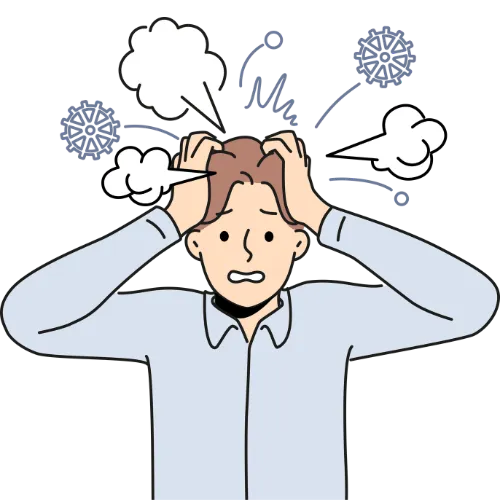
The Vicious Cycle of Chronic Stress & Substance Abuse
In a majority of clinical recovery cases, addiction does not start in a vacuum—it begins as an attempt to self-medicate unbearable emotional distress. Unprocessed grief, chronic marital conflict, debilitating financial debt, workplace burnout, or clinical depression push individuals to seek temporary numbness through alcohol, sleeping pills, or narcotics.
Unfortunately, while substances offer fleeting sedation, they drastically elevate baseline cortisol and adrenaline levels once the intoxication fades. This creates a deepening 'dual diagnosis' loop: stress drives addiction, and addiction magnifies stress, panic attacks, and hopelessness.
At Nasha Mukti Kendra Gumla, we provide comprehensive Dual-Diagnosis psychiatric care. We address both the psychological roots and chemical dependencies concurrently, restoring emotional calm, neurochemical balance, and lifelong mental resilience.
Physical & Psychological Signs of Severe Stress
When stress exceeds the nervous system's capacity, it manifests across bodily organs and emotional reactions:
Physical Manifestations
- Chronic muscle tension, clenched jaw, and tension migraines
- Digestive dysfunction, irritable bowel spikes, and hyperacidity
- Chronic fatigue despite spending 8–10 hours in bed
- Racing heartbeats, chest tightness, and sudden anxiety hyperventilation
- Weakened immune system and frequent susceptibility to illness
Emotional & Cognitive Distress
- Feeling overwhelmed, constant dread that "something bad will happen"
- Turning to alcohol, pills, or weed every evening just to fall asleep
- Severe brain fog, memory blackouts, and inability to make decisions
- Sudden explosive anger directed at spouse, children, or coworkers
- Feelings of emptiness, severe clinical depression, and suicidal ideation
Our Step-by-Step Stress & Dual Diagnosis Protocol
We employ a serene, scientific framework designed to quiet hyperactivity in the sympathetic nervous system:
Phase 1: Psychiatric Assessment & Sleep Restoration (Days 1–7)
Comprehensive clinical evaluation to identify generalized anxiety disorder (GAD), clinical depression, or PTSD. Medical sleep architecture is gently stabilized.
Phase 2: Cognitive Restructuring & CBT (Weeks 2–4)
Licensed clinical psychologists teach patients how to identify cognitive distortions (catastrophizing, all-or-nothing thinking) and reframe thought patterns constructively.
Phase 3: Mindfulness, Yogic Relaxation & Biofeedback (Weeks 5–8)
Sunrise pranayama, Yoga Nidra (guided deep psychophysical sleep), and mindfulness practice to strengthen the vagus nerve and downregulate fight-or-flight hormones.
Phase 4: Healthy Boundary Setting & Long-term Life Balance (Weeks 9–12)
Patients formulate realistic daily schedules, practice conflict-resolution tactics, rebuild family intimacy, and learn to navigate workplace stress without resorting to substances.
Serene Campus Amenities for Mental Wellness
- Tranquil Green Environment: Secluded location in Gumla far away from traffic noise and chaotic city stressors.
- Confidential Counseling Chambers: Private, 1-on-1 therapy spaces where patients can speak their hearts freely.
- Naturopathic Sattvic Dining: Fresh vegetarian nutrition designed to optimize gut-brain axis serotonin production.
- Creative Expression Therapy: Art therapy, expressive writing, indoor games, and relaxing nature walks.
You Do Not Have to Carry the Weight Alone
Peace of mind is possible. Reach out to our compassionate psychiatric counseling team in Gumla today. All conversations are 100% confidential.
☎ Call 8893637550